Our women in STEM are empowering NorthStar.
Feb 11, 2026
International Day of Women & Girls in Science
Advancing the operational safety and sustainability of Earth’s orbital environment.
We believe space is not only a domain of technology—it is a domain of people. That’s why, on International Day of Women and Girls in Science, we’re spotlighting the women behind the work — the scientists, engineers, and analysts helping protect the space environment and keep orbital operations safe. Excellence in space requires diversity of thought, experience, and problem-solving approaches. Building a sustainable space future means building an inclusive space sector.
These interviews are more than career highlights. They’re personal stories of curiosity, resilience, and non-linear journeys — shared with the hope that the next generation of women and girls can see themselves in STEM. Representation isn’t symbolic: it directly shapes who feels welcome, who feels capable, and who believes they belong.
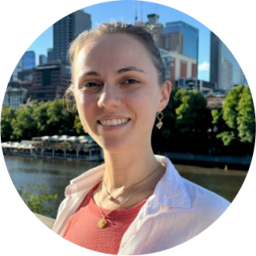 Stephanie Marsh
Can you tell us a bit about yourself and your career journey so far?
I started out with a Bachelor of Aerospace Engineering and Bachelor of Arts in Melbourne, which led to an exchange program in Kiruna, a town above the Arctic circle in Sweden, where I lived for a year and studied a Space Master’s. I always had a natural interest in space, probably influenced by my love for sci-fi and fantasy books, so being able to study at Kiruna for a year, in the same building as the Esrange Space Centre, seeing the Northern Lights regularly and experiencing the midnight sun and total darkness for months, really turned my attention towards the sky and to space. During my bachelor’s degree, I also completed two internships at aerospace companies in Germany, which was a great chance to spend a lot of time with my German family as well (I’m originally from Luxembourg, but moved to Australia with my family when I was 9 years old). I’ve always loved languages, so I finished my degree with a minor in French, and along the way worked in a café and later as a rock-climbing instructor at a climbing gym. I then studied my Masters of Space Engineering at UNSW, during which time one of my professors recommended me to his industry contacts, and a day later I got a job offer to work at a launch company.
From there, I really learned by doing – working on launch trajectory analysis and risk assessments and getting the chance to meet and learn from people across the space industry. An awesome highlight was travelling to Vandenberg Space Force Base and seeing the launch pads there in person. After about three years in launch operations, I moved into my current role as an Orbital Dynamics Specialist at NorthStar, where I’ve been for over a year now. Working within the domain of data fusion, I primarily support international space safety as an operator – in a nutshell, we bring together and analyse data from many different sources, such as earth observations, space-based observations, photometric and passive RF data, to characterise and report on satellite manoeuvres, attitude changes and close approaches, with the goal of providing a safe space environment and increased situational awareness in space.
Which technical problem or challenge in your field inspires you the most, and why?
I think a large challenge is managing the increasing number of satellites that enter the space domain, and collision avoidance and debris impacts become very important. I love being able to work in real-time operations, where you’re dealing with live data and more time-critical decisions. Being able to also work directly with the code and see how things function behind the scenes has also helped me build a much better understanding of orbit determination algorithms, and it keeps the work very engaging. I’ve personally also always been quite curious about the space environment in terms of space weather, radiation belts and how the environment changes in different orbital regions.
What achievements in your career are you most proud of?
I’m really proud of the international simulation exercises I’ve participated in — working in a shared operations environment, responding to high-pressure scenarios, and putting our skills to the test has been incredibly rewarding. Being named as a finalist in the 2024 Australian Space Awards was also a huge honour and something I’m very proud of.
What advice would you give to someone wanting to enter this field?
Being open to new opportunities even if they seem scary. A lot of my career path and path in life in general has come from saying yes to unexpected, spontaneous things – like the exchange program in Sweden or last-minute work opportunities and trips – and trusting that I’d figure it out along the way. Also making the best out of any situation. Covid lockdowns disrupted my original plan to start working in the space industry in Germany, which led me to study my Master’s in Australia instead and in the end, everything worked out better than I could have imagined. I think going to networking events is also important, not just to meet people but also to gain a larger perspective of what goes on in the space industry worldwide. For me, these kinds of events always inspired me. One particularly memorable experience was chatting with an astronaut who described what Space Shuttle flights were like as a shuttle pilot – I remember just being in complete awe and feeling even more excited to work in this field.
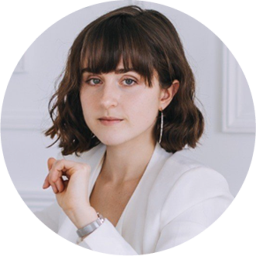 Chloé Gingras
Can you tell us a bit about yourself and your career journey so far?
I once heard someone joke that astronomy is a gateway drug to physics: you start with a perfectly innocent sense of awe at black holes and supernovae, and before you know it, you’re spending your Friday nights staring at some terrifying equations. That was certainly true for me. It began with an astrophysics class in Cegep, which led to an exploratory year in the Astrophysics program at University of Toronto, which I had to leave for personal reasons. I returned to Montreal and studied Engineering Physics at Polytechnique Montreal. (We did no astrophysics whatsoever, but I did stare at plenty of terrifying equations.)
After graduating, I took a gap year to go backpacking, and then did a Master’s in neutrino physics at McGill. I managed to sneak in a couple Astro classes even though my research topic wasn’t really related. This was mostly during the pandemic, and I lived alone and worked alone – it was a tough time. Afterwards, I wanted a change of scenery, and eventually, I stumbled upon an internship at NorthStar in Luxembourg that spoke to my interests. I moved over without even knowing that our main office is twenty minutes away from where I grew up! But I love it here, and luckily, my internship turned into a permanent position.
What does a SSA Operation Software Engineer do, and what let you into that role?
In short, the role is about bridging the gap between physics and software engineering. NorthStar Luxembourg develops SSA solutions that rely on advanced research and modeling, which means physicists and software engineers work in close collaboration; having some knowledge of astrodynamics and an affinity for programming, I had one foot in both. The position allows me to connect both sides and follow a project from its inception as a physics problem to its implementation as a turnkey software solution.
Which technical problem or challenge in your field inspires you the most, and why?
This is a difficult question for me, because I’m a puzzle-solver and I most enjoy sinking my teeth into the very concrete, granular technical problems that we work on every day. That said, I’m very much interested in the scalability of astrodynamics algorithms. Classical methods are elegant and practical on a small scale, but they become impractical or prohibitively computationally expensive for constellations or whole catalogues. Beautifully clever algorithms have been developed and are being worked on to maintain accuracy and propagate uncertainty at large scales.
What achievements in your career are you most proud of?
I’m only getting started, ask me again in a couple years! For now, I’m proud of keeping pace with the learning curve involved in learning both a new programming language and software engineering on the job, as a novice, and to have been trusted to work on some fairly involved projects. I can’t claim much credit, though. The team has been exceptionally supportive.
What advice would you give to someone wanting to enter this field?
Get comfortable collaborating across disciplines, and become versatile yourself, if you can. From where I’m standing, in this field, knowledge of physics is invaluable to software, strong software fundamentals are essential to physics research (especially in creating reliable SSA systems), and neither evolve far from operations. It all has to fit together. (Plus, it’s all fun – so why wouldn’t you want to?!)
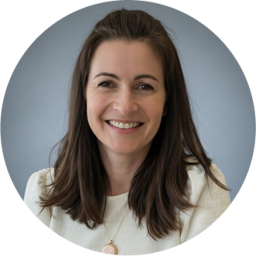 Noemi Giammichele
Can you tell us a bit about yourself and your career journey so far?
I’m a hockey lover, a mom of three little monsters, and an astrophysicist. For the past three years, I’ve been working at NorthStar Earth & Space, a Montréal-based start-up. I began my academic journey with a bachelor’s degree in physics, then took a detour into mechanical engineering for my master’s degree. During that time, my work focused on developing a new parameterization to better optimize airplane wing designs.
Eventually, I found my way back to my first love—astronomy—by completing a PhD in astrophysics. I then spent six years in postdoctoral research in Toulouse, France, studying pulsating white dwarfs. After that, I was ready for a new challenge and joined NorthStar, where I now work on monitoring and tracking space debris.
What does an image processing specialist do, and what led you into that role?
As an astronomer, my job was essentially to stare at telescope images and uncover the stories hidden in the light. Those images contain valuable clues about a star’s structure, properties, and evolution, which can be revealed through careful analysis and modeling.
At NorthStar, the challenge is surprisingly similar—just closer to home! I work with images capturing the light traces of Resident Space Objects (RSOs) as they cross our telescopes field of view. From those traces, I derive their physical characteristics as well as their position and velocity. Precise and accurate measurements are key to reliably tracking and characterizing the many satellites orbiting our planet.
Which technical problem or challenge in your field inspires you the most, and why?
Since the beginning of humanity, we have looked up at the dark sky, the stars, and the vastness of the universe. Recognizing that we live on a small blue dot, lost in such immensity, is a fundamental part of the human experience.
Today, with the rise of mega-constellations and the rapid expansion of satellite launches, we face a real risk of permanently polluting our night skies. It would only take a few collisions to seriously compromise our access to space. We’re already seeing the impact on ground-based astronomy, as light pollution from satellites increasingly interferes with observations.
That’s why I find my work at NorthStar so meaningful. By monitoring and tracking objects in orbit, we help protect our access to space and preserve the night sky—the same sky that has inspired generations to explore and reach further.
What achievements in your career are you most proud of?
During my PhD, I developed a new way to probe the core composition of certain white dwarf stars by rethinking how we analyze their pulsation properties and theoretical models. I’m especially proud that this work was published in Nature. It’s still amazing to me that by observing the subtle flickering of an unreachable star many light-years away, we can determine the composition of its core.
What advice would you give to someone wanting to enter this field?
It is a demanding and often stressful field, but my advice is simple: go, go absolutely go for it. It can be very difficult to see a clear career path at the beginning, but it is a field worth being proud of. It also provides a strong set of skills that can lead to successful careers in many related areas.
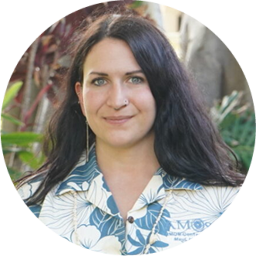 Laura Pirovano
Can you tell us a bit about yourself and your career journey so far?
Back in high school, while choosing the topic I wanted to bring for the final exam I stumbled upon the SDO (solar dynamics observatory) a satellite publishing incredible pictures of the Sun at different spectral lengths. Of course I had no idea of what was going on, or what that meant, I was simply in awe of how beautiful those pictures were and the fact that they came from space. Despite this love at first sight, I did not venture the unknown path and instead went on to study mathematics in my bachelor, at Politecnico di Milano. I was good at it; it was a safe choice.
After three years, I realised it was not fulfilling my curiosity and decided was time to apply all those abstract concepts to space. I did my master’s degree at TU Delft focusing on space flight and my thesis in Germany on the coupling between orbital dynamics and flexible structures. It was while I was looking for a job that I stumbled on the theme of “Space Situational Awareness” which I had not been taught previously. I discovered the problem of cataloguing, of tracking, of making space safe for operations. And from there on I never left it.
I did my PhD on it (in between Spain and the Uk), then moved to New Zealand and continued with my Postdoc and PhD students’ supervision, including a brief teaching phase at the Master of Aerospace. After all these years applying mathematical and statistical methods to contribute to the cataloguing efforts theoretically, I felt the need to look at it from an operational perspective, and the occasion came at the perfect moment when NorthStar decided to open a pacific office.
What does an orbital analyst do, and what led you into that role?
An orbital analyst, as the name might imply, analyses data coming from different sources to characterise satellites orbital motions. Whether it is following the intended trajectory, it has deviated, and especially why it did so. It is an operational effort to understand where everything is and where it is going, which is the core of Space Situational Awareness.
Which technical problem or challenge in your field inspires you the most, and why?
It is both a mathematical challenge and an ethical one. Mathematically, it is very rewarding to use abstract tools and solve difficult problems, contributing to the literature on the topic, and becoming the starting point of someone else’s research. Ethically it does raise a question of sustainability of the current use of space, it is an open question which needs answers and solutions.
What achievements in your career are you most proud of?
I am proud of having taken chances, and not just safe choices. I am proud of the research I have carried out and the recognition from the other researchers in the field.
What advice would you give to someone wanting to enter this field?
There are so many aspects of the field which are to be explored, and not just from an engineering perspective. It’s the diversity in the field which is enriching it and making it progress. As a woman, it initially felt weird to enter a room full of adult men while I was trying to make my first steps in the field. But just like me, there were many other women, and I am very happy to see the representation growing each time I go to a conference. If I can give some advice I did not follow myself: reach out! Ask, be curious, so many options open.