

34,000 ACTIVE SPACE OBJECTS
Contested and congested orbits
threaten human space activity.
threaten human space activity.
The exponential growth of satellites, spacecrafts,
launches, manoeuvres, and debris is reshaping the
near-earth environment.
NorthStar’s Space Situational Awareness (SSA) and
Space Domain Awareness (SDA) services identify
what’s there and how it’s moving, essential to
operating safely and effectively in space.

1
DETECT
Space Object Tracking
Scanning through space, from LEO to GEO.

Scanning through space, from LEO to GEO.
NorthStar’s space-based sensors scan
continuously across near-Earth orbits,
complemented by ground-based and
partner observations to expand
coverage and maintain custody of
space.
Passive Collection
Our sensors continuously scan for objects
without requiring a predefined target,
detecting new and previously unknown objects.
Tasked Data Acquisition
Direct NorthStar’s space-based sensors
toward specific objects when targeted
tracking data is needed across LEO, MEO,
and GEO.
Customer-Supplied Imagery Processing
Turn customer-supplied raw sensor
imagery into usable tracking data by
calibrating observations, detecting
objects, measuring their positions, and
correlating them against known objects.
Ground-Based Collection
Generate tracking data using NorthStar-managed
ground-based optical systems, providing an additional source
of observations across orbital regimes
1 DETECT
Space Object Tracking
Scanning through space, from LEO to GEO.
NorthStar’s space-based sensors scan continuously across near-Earth orbits, complemented by ground-based and partner observations to expand coverage and maintain custody of space.
Our sensors continuously scan for objects without requiring a predefined target, detecting new and previously unknown objects.
Direct NorthStar’s space-based sensors toward specific objects when targeted tracking data is needed across LEO, MEO, and GEO.
Turn customer-supplied raw sensor imagery into usable tracking data by calibrating observations, detecting objects, measuring their positions, and correlating them against known objects.
Generate tracking data using NorthStar-managed ground-based optical systems, providing an additional source of observations across orbital regimes.
2
UNDERSTAND
Space Object Information
Turn observations into understanding.
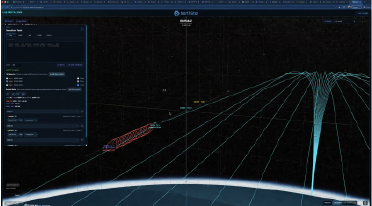
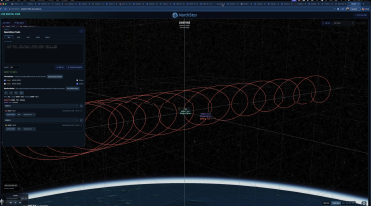
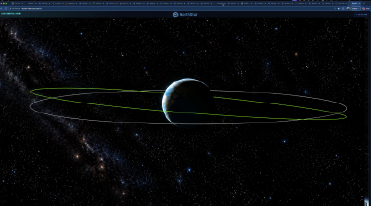
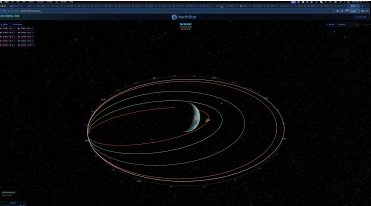
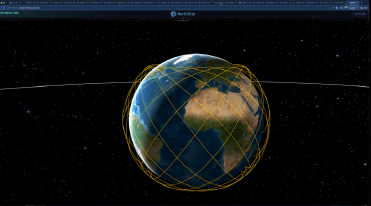
NorthStar combines multi-source
observational and orbital data to
characterize objects in space. Our
analytics reveal how they move, how they
behave, and when that behavior
changes.
Automated Data Curation, Fusion & State
Vector Generation
Combine observations from NorthStar,
customer, and third-party sensors
(including optical, radar, and RF sources)
to generate state vectors and a more
reliable picture of an object’s trajectory.
Collision Awareness & Avoidance
Continuously screen protected satellites
against the space-object catalogue to
identify close approaches and potential
threats. Assess factors including miss
distance, conjunction geometry, and
probability of collision.
Once a risk has been identified, consider
potential avoidance maneuvers,
accounting for operational constraints
such as propulsion limits or fuel budget
Launch & Early-Orbit Risk Assessment
Analyze launch windows for potential
collision risks, and observe newly
launched objects while their trajectories
are still developing. This service also
supports the identification of potentially
malicious launches.
Maneuver Detection & Classification
Notice when an object deviates from its
expected trajectory. Using observational
and orbital data, detect potential
maneuvers, and characterize behavioral
changes.
Photometric Pattern-of-Life Analysis
Establish a pattern in an object’s
observed brightness and detect
variations from that baseline. Those shifts
can indicate attitude changes or
potentially adversarial activity.
2 UNDERSTAND
Space Object Information
Turn observations into understanding.
NorthStar combines multi-source observational and orbital data to characterize objects in space. Our analytics reveal how they move, how they behave, and when that behavior changes.
Combine observations from NorthStar, customer, and third-party sensors (including optical, radar, and RF sources) to generate state vectors and a more reliable picture of an object’s trajectory.
Continuously screen protected satellites against the space-object catalogue to identify close approaches and potential threats. Assess factors including miss distance, conjunction geometry, and probability of collision.
Once a risk has been identified, consider potential avoidance maneuvers, accounting for operational constraints such as propulsion limits or fuel budget
Analyze launch windows for potential collision risks, and observe newly launched objects while their trajectories are still developing. This service also supports the identification of potentially malicious launches.
Notice when an object deviates from its expected trajectory. Using observational and orbital data, detect potential
maneuvers, and characterize behavioral changes.
3
RESPOND
Operation Support & Training
Human expertise, built into the operation
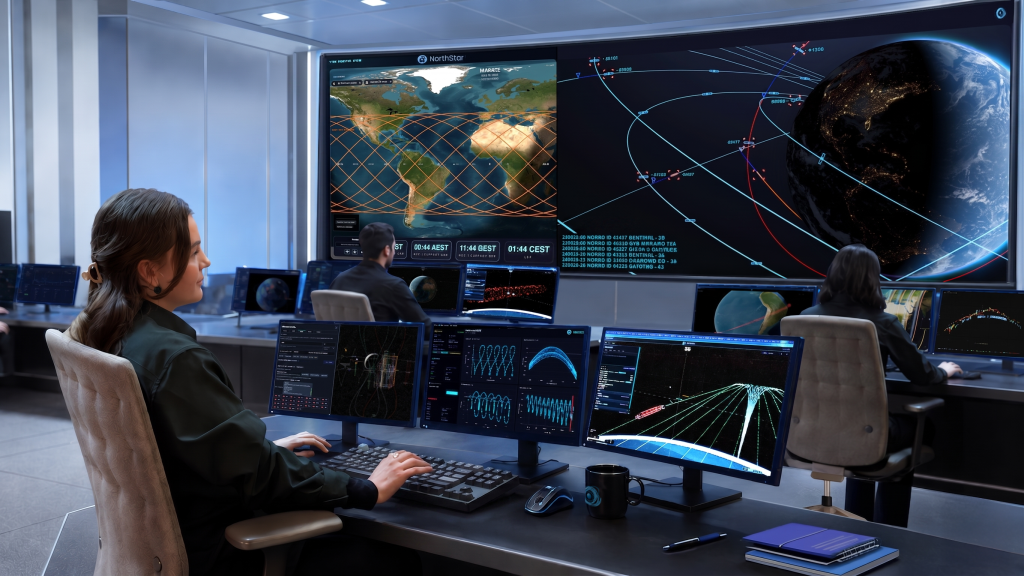
NorthStar’s experienced analysts
work alongside client operations
teams to interpret data and guide
next steps. Our experts are available
across extended operating hours to
maintain continuity of support as
mission requirements evolve.
Support
Work alongside NorthStar analysts
during real-world operations to
monitor objects, investigate
anomalies, and interpret tracking
data. Expert analysis and
visualizations help teams
understand developing situations
and guide responses.
Training
Gain greater self-sufficiency in
space-domain analysis. NorthStar
experts train your team to perform
key analytical tasks while developing
a comprehensive understanding of
space objects and their behavior.
Simulation
Practice responding to realistic
scenarios in a simulated
environment. Your team can apply
and test their skills in situations
involving satellite manoeuvres, close
approaches, and other challenges.
3 RESPOND
Operation Support & Training
Human expertise, built into the operation
NorthStar’s experienced analysts work alongside client operations teams to interpret data and guide next steps. Our experts are available across extended operating hours to maintain continuity of support as mission requirements evolve.
Work alongside NorthStar analysts during real-world operations to monitor objects, investigate anomalies, and interpret tracking data. Expert analysis and visualizations help teams understand developing situations and guide responses.
Gain greater self-sufficiency in space-domain analysis. NorthStar experts train your team to perform key analytical tasks while developing a comprehensive understanding of space objects and their behavior.
Practice responding to realistic scenarios in a simulated environment. Your team can apply and test their skills in situations involving satellite manoeuvres, close approaches, and other challenges.
Safe and Sustainable Space
NorthStar will hold an unprecedented database of objects and events in the realm of space. Knowledge delivered by NorthStar will contribute to frameworks for future space governance , making space a peaceful and sustainable environment for all.